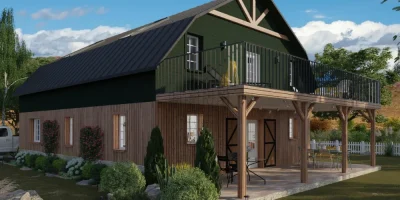
A site plan is often the first document the building department wants, and the last thing a contractor wants to get wrong.
For any construction project, proper planning is essential to success. At the heart of that planning process is the site plan—a detailed architectural map that lays out how proposed structures, landscaping, and infrastructure will A site plan is the foundation of every residential build.
It’s a scaled, bird’s-eye drawing of a property that shows where structures, boundaries, utilities, and terrain all meet.
Get it right and the project moves.
Get it wrong and you’re staring down redlines, delays, and shrinking margins.
For contractors and home builders, the stakes go beyond paperwork.
A good construction site plan wins client trust, supports the planning process at the local level, and prevents costly mistakes once crews break ground.
It also lays the groundwork for renderings that help close deals before construction starts.
This guide walks through what a site plan is, what it must include, who creates one, and how residential pros use site plans at every stage of a project.
Key Takeaways
- A site plan is a scaled overhead drawing of a property that shows existing and proposed conditions on the lot.
- Most site plans include property lines, setbacks, structures, utility lines, driveways, topography, and a title block.
- Contractors use site plans for building permits, client proposals, and pre-construction coordination on the construction site.
- Cedreo helps contractors create both 2D site plans and 3D presentations from the same project in under two hours.
Why trust us? Here at Cedreo, we’ve got 20+ years of experience working with housing pros in the home design space. So we know what it takes for contractors and home builders to create site plans and project visuals that help them land more clients!
See How You Can Create Complete Projects with Cedreo
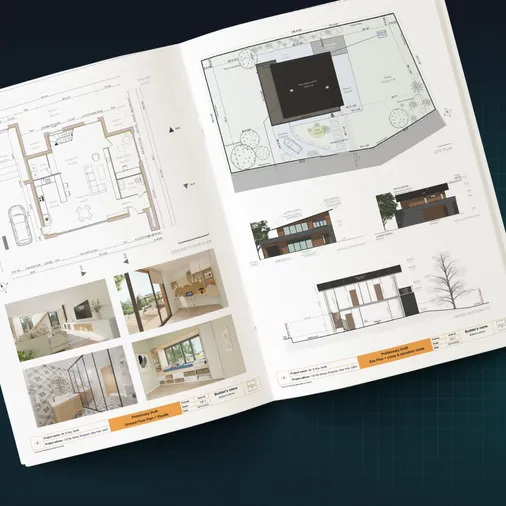
Plans – Get site plans, 2D floor plans, electrical plans, cross sections and elevation views — with all the technical details you need for a comprehensive project overview.
3D Visualizations – Use interior and exterior 3D renderings as well as 3D floor plans to help clients understand the finished project.
Documentation – Manage all your visual documents in one place, so it’s easier to present and sell your projects.
No credit card required, no commitment
What Is a Site Plan?
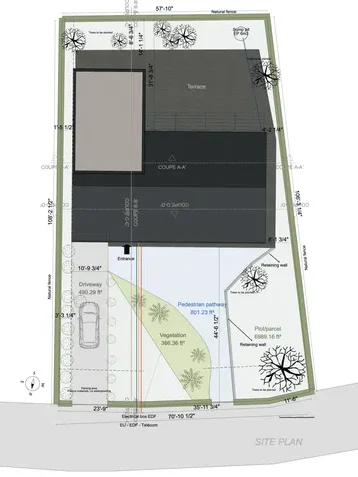
A site plan is a scaled, bird’s-eye drawing of a property that shows where the house, lot, utilities, and landscape come together on one sheet.
It’s one of the primary documents required for most residential building permit applications in US jurisdictions.
Unlike a floor plan, which shows just the interior layout of one building, a site plan shows the entire property from above.
What Key Elements Does a Site Plan Include?
A comprehensive site plan includes seven key elements, and each one serves a specific function in client presentation, permit review, and project coordination.
Here’s what every good site plan should include.
Property Boundaries and Lot Dimensions
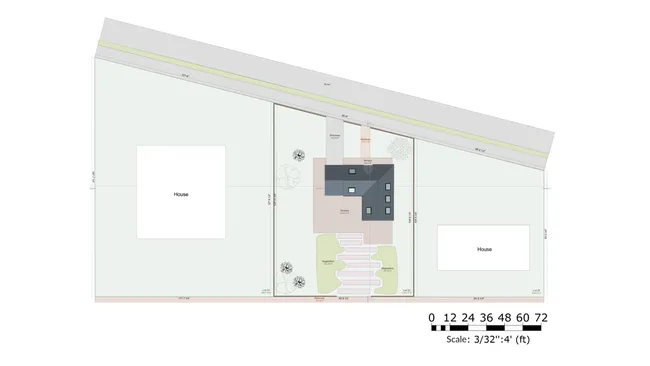
The first job of any site plan is to draw the property boundaries to scale.
Property lines show where your client’s lot ends and the neighbor’s begins, plus the exact dimensions of the entire property and the construction limits everything else has to live inside.
These come from the deed or a recent survey, not a guess off Google Maps.
Existing and Proposed Structures
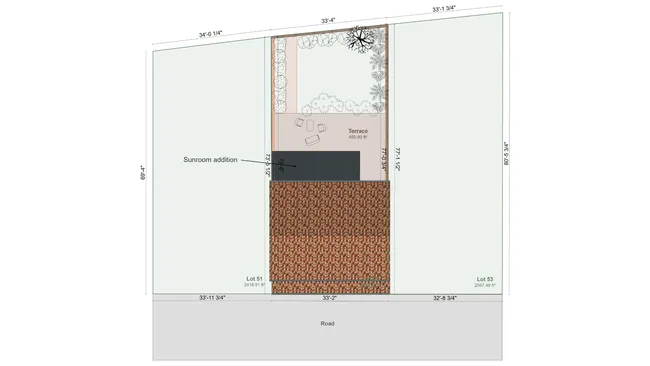
Every site plan needs to capture existing and proposed conditions to show what’s already on the lot and what’s being added.
That includes:
- Existing on-site structures: the current house, garage, shed, or accessory building
- Proposed structures: the new home, addition, detached studio, or pool house, etc.
- Structural elements like decks, porches, or covered patios that tie into the building
Reviewers compare the existing structures to the proposed buildings to confirm zoning and setback compliance.
Setback Distances
Local zoning rules require minimum distances between buildings and property lines.
Setbacks are usually called out from the front, rear, and both side property boundaries.
Your site plan should show these distances clearly, with dimensions running from the proposed structure to the nearest property line.
PRO TIP! If you’re using software like Cedreo, you can easily add custom dimensions to clearly show the setback distances.
Utility Connections
A good site plan maps where every service enters the property.
Standard utility callouts include:
- Water and sanitary sewer lines
- Gas service and meter location
- Overhead power lines and utility poles in the right-of-way
- Septic tanks, leach fields, or well heads
- Stormwater drainage facilities
- Nearby fire hydrants and any easements the utility connections cross
Driveways, Access Points, and Parking
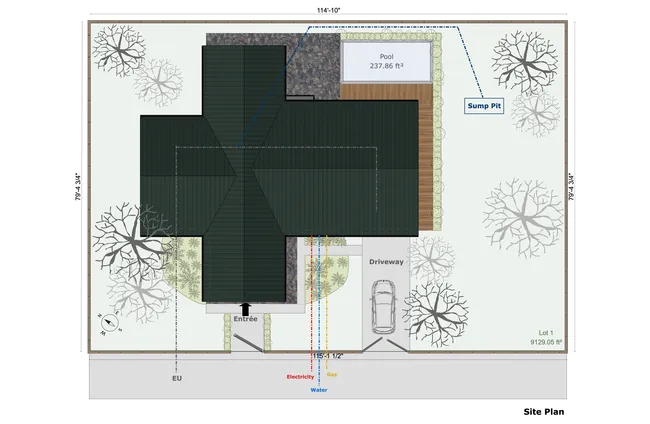
Show how vehicles get on and off the property.
That means:
- Driveways
- Curb cuts
- Parking spaces
- Walkways and pedestrian paths
- Gate locations and access points
For a commercial project or larger development project, include traffic flow arrows and dedicated parking spaces.
Showing the traffic flow on the site also helps the client picture how the building site will work day to day, from school drop-offs to deliveries.
Topography and Grading
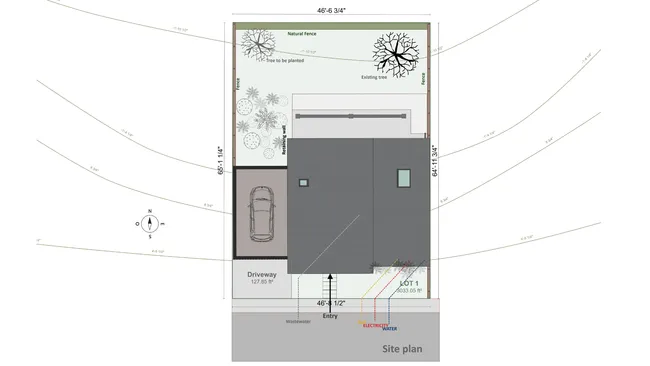
If the lot slopes, your site plan needs to show it.
Topography uses contour lines (each line represents a fixed change in elevation), and grading details include proposed retaining walls, swales, and other land drainage features.
This is the section where the grading plan gets locked in.
Skip it on a sloped lot and you’ll be solving water problems for the life of the house.
North Arrow, Scale Bar, and Title Block
Every site plan ends with the same three identifiers: a north arrow (compass rose), a scale bar showing precise measurements, and a title block.
The title block (sometimes called the title page) lists the project name, address, drawing date, drafter, and revision number.
These are the small details reviewers check first, and the ones missing most often from first-time permit submissions.
The Cedreo Advantage! Cedreo automatically generates the north arrow, scale bar, and dimensions on every 2D site plan export, which are the elements most commonly missing from first-time permit submissions.
What Is a Site Plan Used For?
Contractors and home builders use site plans at three distinct stages of a residential construction project.
Each stage has different stakeholders, different review criteria, and a slightly different version of the same drawing.
Site Plan for Building Permit Applications
Site plans are the first document most jurisdictions ask for when reviewing a residential build.
The reviewer wants to see that the project adheres to local building codes, zoning setbacks, and development codes before they approve a single inch of foundation work.
From what we’ve seen, the contractors who turn around building permits the fastest are the ones who provide professional and detailed plans to permit offices.
A clear, accurate site plan shortens the back-and-forth with the planning office since reviewers have all the details they need.
Site Plan for Client Proposals and Pre-Sale Presentations
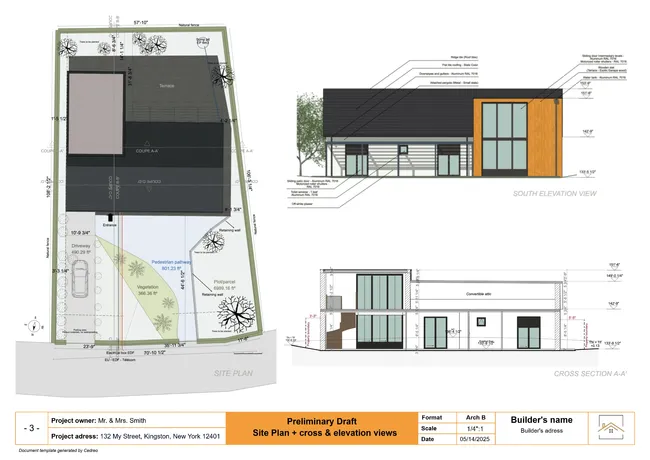
Long before any building permits get filed, a site plan helps sell the project.
When a client can see the proposed house placed on their actual lot, with driveway, deck, and landscaping in context, they stop asking “what about the trees?” and start asking “when do we start?”
From what we’ve seen work for contractors, leading the proposal with a clear 2D site plan plus a 3D rendering can close deals faster than any printed quote.
That’s why a full color plan is often worth the extra hour at the proposal stage.
See more about 3D site plans later in the article.
Site Plan for Pre-Construction Planning and Coordination
Once the contract is signed, the same site plan becomes the coordination tool for the construction process.
Each trade pulls something different from it:
- Foundation crews: Verify building placement and stake-out locations.
- Excavation crews: Check grading limits and silt fence locations.
- Landscapers: Confirm major landscape features stay clear of utility connections.
- Utility subs: Locate trenching paths and tie-in points.
The construction site runs smoother when every trade is looking at the same drawing.
Proper planning at this stage saves rework later, and a good site plan keeps the whole construction project aligned from day one to final walkthrough.
What Is a Construction Site Plan?
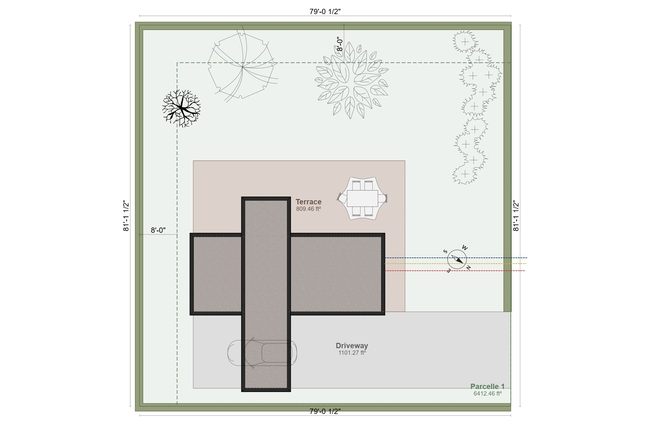
A construction site plan is the same document as a site plan, and the two terms are used interchangeably in residential construction.
Some municipalities and commercial projects use “construction site plan” to refer specifically to the version submitted with a building permit application, as distinct from a preliminary site plan or conceptual sketch.
In practice, contractors use whichever term their local jurisdiction prefers.
The content (property lines, structures, utilities, grading) stays the same.
Construction site plans submitted at permit stage typically add finer notes about construction limits, staging, and erosion control, and detailed site plans for larger jobs may even include traffic control and crane setbacks.
What Is the Difference Between a Site Plan and a Floor Plan?
A site plan shows the entire property from above, while floor plans show the interior layout of a single building.
Both drawings use a scaled top-down view, but they answer very different questions.
- Site plans answer…where does the house sit on the lot, and how does it relate to setbacks, utility lines, driveways, and landscape elements?
- Floor plans answer…where do the walls, doors, windows, and rooms go inside the house?
Most residential builds use both side by side.
The site plan lives in the front of the project package, and the floor plans follow right behind it.
What Is the Difference Between a Site Plan and a Plot Plan?
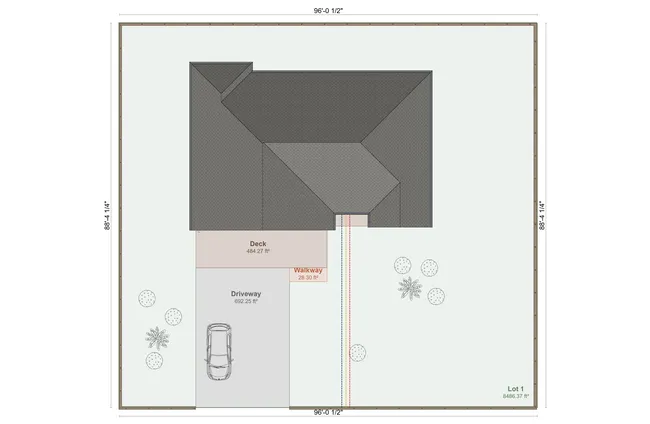
A plot plan and a site plan look similar, but they’re not the same thing.
A plot plan is a simpler, surveyor-prepared drawing that focuses on property boundaries, the building footprint, and any easements.
A site plan is broader and more detailed.
It shows the plot plan information plus utilities, grading, landscaping, parking, and any other on site structures.
Think of the plot plan as the legal property map and the site plan as the working construction document built on top of it.
- For small jobs (a shed, fence, or driveway extension), a plot plan may be enough.
- For new construction or a major addition, you’ll need a comprehensive site plan.
Here’s a side-by-side look at how the three plan types compare:
| Site Plan | Floor Plan | Plot Plan | |
| View | Top-down of the entire property | Top-down of the building interior | Top-down of property boundaries |
| Scope | Property + structures + utilities + landscape | Single building interior layout | Property lines + building footprint + easements |
| Primary use | Permits, client proposals, coordination | Interior design, construction layout | Legal property reference, simple permits |
| Drawn by | Contractor, builder, engineer, or surveyor | Architect, builder, or contractor | Land surveyors |
| Includes utilities? | Yes | No | Usually no |
| Includes setbacks? | Yes | No | Yes |
2D Site Plans vs. 3D Site Plans
Contractors use two site plan formats, depending on the purpose.
Each has its place in the planning process.
2D Site Plans
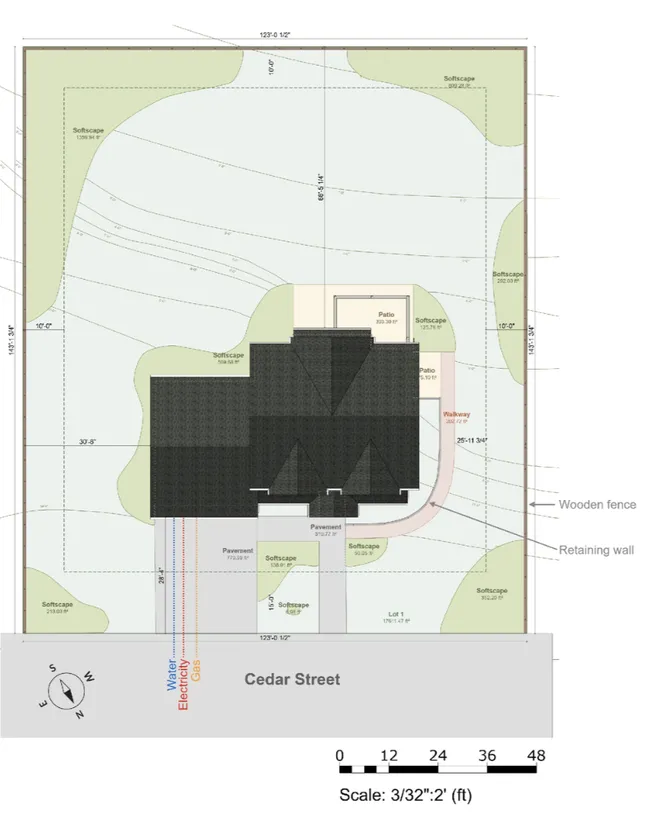
A 2D site plan is a flat, scaled drawing viewed from directly above.
It’s the standard format used for technical review and is precise, dimensioned, and annotated.
This is the version that goes into the permit package.
3D Site Plans
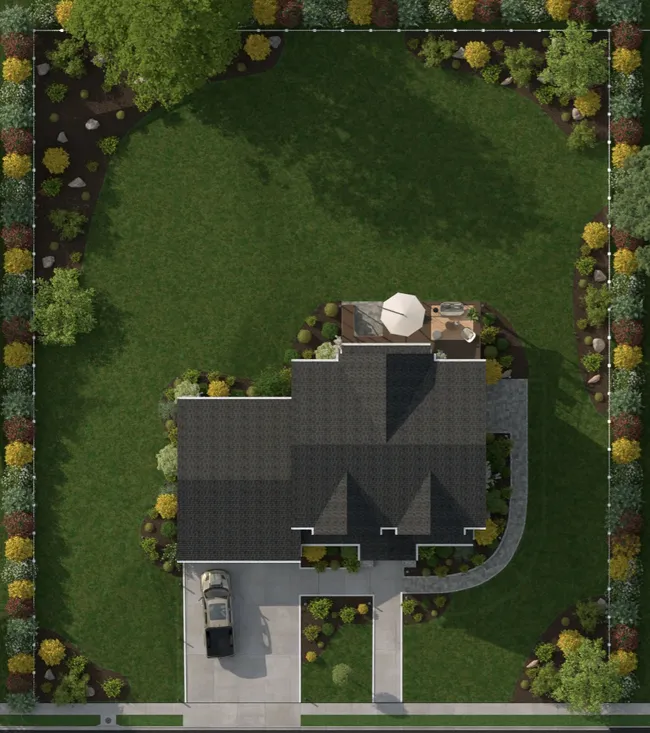
A 3D site plan adds elevation, materials, and landscaping to give clients and stakeholders a realistic view of the finished project.
3D site plans are used for client presentations and pre-sale proposals, not permit submissions.
Pair the technical 2D drawing with a 3D visualization, and you’ve got both the approval document and the closing tool from a single project.
The Cedreo advantage! Cedreo generates both the 2D plan and the 3D visualization from the same project, so contractors have the client presentation ready without switching software or rebuilding the design.
| 2D Site Plan | 3D Site Plan | |
| View | Flat overhead drawing | Perspective view with depth and elevation |
| Purpose | Technical review and coordination | Visualization and client buy-in |
| Typical use | Permit submissions and contractor handoff | Sales presentations and client proposals |
| Shows materials and textures? | No | Yes |
| Dimensions and annotations | Precise and complete | No |
| Best audience | Building officials and trade crews | Homeowners and project stakeholders |
Who Draws a Site Plan in Residential Construction?
The person who draws the site plan depends on the size and complexity of the project.
For a new build or major addition, three people often touch the site plan:
- Land surveyors provide the legal property boundaries, exact dimensions, and existing topography.
- A licensed engineer may handle grading, drainage, and any complex projects involving retaining walls, septic systems, or land drainage solutions.
- The contractor or home builder places the proposed structures, driveways, decks, and landscape elements using design software like Cedreo.
For smaller remodels or simple additions, the contractor often drafts the entire site plan in-house, using the surveyor’s plat or the property’s blueprints as a starting point.
PRO TIP! Even when you’re handing the technical work to an engineer or architect, sketching a preliminary site plan yourself first saves time and ensures clear communication between you and the engineer/architect.
Site Plan Examples by Project Type
The fastest way to understand what a good site plan should look like is to see finished examples by project type.
The following site plan examples were all created with Cedreo:
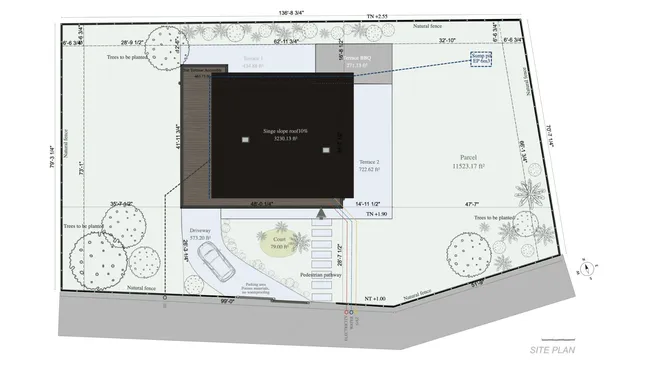
Single-Family Home Site Plan: A new build on a quarter-acre lot, showing the house, driveway, deck, and a full landscaped front yard.
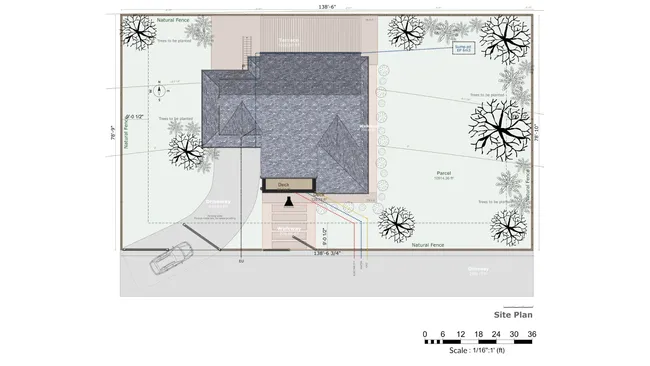
Addition and Remodel Site Plan: An existing two-story home with a proposed side addition, new patio, and updated landscape features around the perimeter.
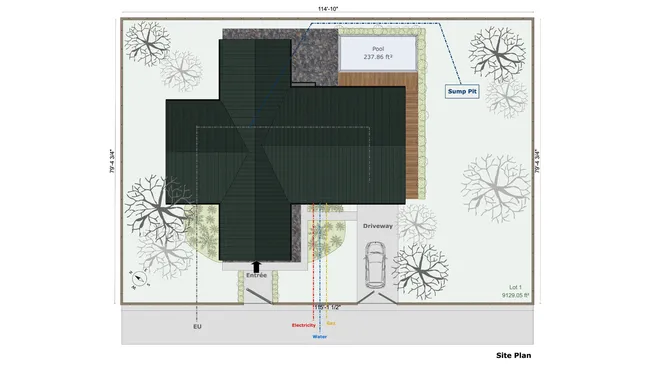
Backyard Pool and Outdoor Living Site Plan: A remodel showing the existing house, new in-ground pool, pool deck, retaining walls, garden elements, and outdoor structures around the patio.
Build Better Site Plans Faster with Cedreo
Making a site plan starts with importing the property document, drawing the lot boundary and setbacks, placing structures and terrain, and exporting the annotated 2D plan.
For contractors using Cedreo, the full process takes under two hours and produces both the 2D site plan document and the client presentation with 3D views from a single project.
With Cedreo, you can:
- Import a survey or existing blueprint to trace the lot.
- Use terrain modeling software to add slopes, retaining walls, and land drainage features.
- Generate both a 2D site plan and a 3D rendering from the same project.
- Export a clean, dimensioned site plan ready for the permit office.
For the complete drawing process, see our guide on how to make a site plan.
Sign up for a free Cedreo account today!
Site Plan FAQs
What is a site plan in construction?
A site plan is a scaled top-down drawing of a property that shows existing and proposed structures, property lines, utilities, and landscaping.
Most contractors use it for both building permits and client presentations, and tools like Cedreo make it easy to create one in hours instead of days.
What does a site plan need to include for a building permit?
Most site plans submitted for building permits include property boundaries, setbacks, all existing and proposed structures, utility lines, driveways, grading, a north arrow, scale bar, and title block.
Some local building codes also require easements, fire hydrants, and a vicinity map of surrounding streets.
What does a 2D site plan show vs. a 3D site plan?
A 2D site plan is a flat view without perspective that shows precise measurements, dimensions, and layout from directly above
A 3D site plan adds perspective, elevation, materials, and landscape elements to help clients visualize the finished project, and Cedreo can produce both formats from a single project file.
What is the easiest way to create detailed site plans?
The easiest way to create detailed site plans is to use contractor design software like Cedreo.
In less than 2 hours you can easily import a survey or blueprint of the building site, draw existing and proposed structures, and add custom measurements and notes.